One analysis layer, read by every Navionyx surface
Navionyx IQ is the analysis layer that sits behind the behavioural insight you see across Navionyx products. It is not a dashboard and not a tracking feature. It is the system that reads vehicle telemetry, works out what that vehicle's ordinary behaviour looks like, and identifies what departs from it.
It runs as a service of its own, separate from the applications that display its output. That separation is deliberate. The analysis never competes with your live tracking for resources, and the applications never need to understand how a conclusion was reached in order to show it.
Wherever you see the Powered by Navionyx IQ mark, the numbers on that screen came from this layer. That includes behaviour profiles on the Navionyx vehicle view, portfolio risk views used by lending partners, and analysis surfaced inside white labelled products built on the Navionyx platform.
The mark exists so that a figure can be traced back to a method. When a credit officer, a fleet head or an auditor asks where a number came from, that question should have an answer, and this page is it.

What Navionyx IQ reads from vehicle data
Navionyx IQ derives everything from telemetry the vehicle already sends. No additional hardware is required for the behavioural analysis, though richer sensors improve certain outputs, and the system says so rather than quietly guessing.
That last group matters more than it first appears. A device that goes dark during a vehicle's normal working hours is frequently more actionable than any single speeding event, and it needs no behavioural history to detect. It works from the first week.
How Navionyx IQ builds a vehicle's baseline
Navionyx IQ processes a vehicle through five stages. Each stage produces something the next stage reads, and no stage reaches back into raw telemetry once it has been summarised.

-
{{ flowDot }}
-
1
Normalise
raw telemetry → clean positionsRaw telemetry arrives from many device generations and firmware versions, and it is never clean. Before anything is measured, Navionyx IQ removes impossible positions, discards readings whose implied speed could not physically occur, resolves duplicates, restores correct time ordering, and marks gaps where the device was silent. Nothing downstream ever sees an unprocessed reading.
This stage is unglamorous and it is where most analytical errors are actually prevented. A single bad position can add tens of kilometres to a day's distance, and that false distance would then distort every rate calculated from it.
-
2
Segment
clean positions → trips and stopsCleaned positions become trips and stops. A stop is a sustained period within a small radius, not simply a reading showing zero speed. Trips are bounded by stops or by genuine data gaps, so a reconnection after silence never gets recorded as a journey that did not happen.
-
3
Summarise
trips and stops → one summary per vehicle dayEach vehicle day is reduced to one compact summary: hours of movement by hour of day, distance, speed distribution, zones touched, first and last movement, and data quality markers. This summary is computed once and never recomputed. Everything the system later says about a vehicle is derived from these summaries rather than from reprocessing history, which is what makes long baselines affordable and fast.
-
4
Profile
daily summaries → rolling 90 day baselineDaily summaries accumulate into a rolling baseline across roughly 90 days, weighted so recent weeks count more than older ones. From that baseline the system extracts the vehicle's duty windows, its usual territory, its own speed percentiles, and a pattern stability score describing how predictable the vehicle actually is.
The profile is rebuilt every night. Because it reads compact summaries rather than raw history, a rebuild is fast enough to run across an entire fleet without any visible load.
-
5
Compare
recent days vs baseline → events with evidenceRecent days are compared against the baseline. Where something departs materially from the vehicle's established pattern, Navionyx IQ records an event with the observation, the baseline it departed from, and how far it departed.
Analysis runs in the background on a schedule. No conclusion is ever computed while you wait for a screen to load, which is why results appear immediately and why opening a report costs nothing.
Why Navionyx IQ compares a vehicle only against itself
Most alerting in this industry works on fixed thresholds. Someone configures a start time, a speed limit and a geofence, and the system reports departures from those settings. The approach is simple and it fails in two predictable directions.
It raises alerts that are not surprising, because the configured value never matched how that vehicle actually works. And it stays silent on things that genuinely are surprising, because nobody thought to configure a rule for them.
Navionyx IQ configures nothing. It reads what the vehicle has actually done and derives the pattern from that.
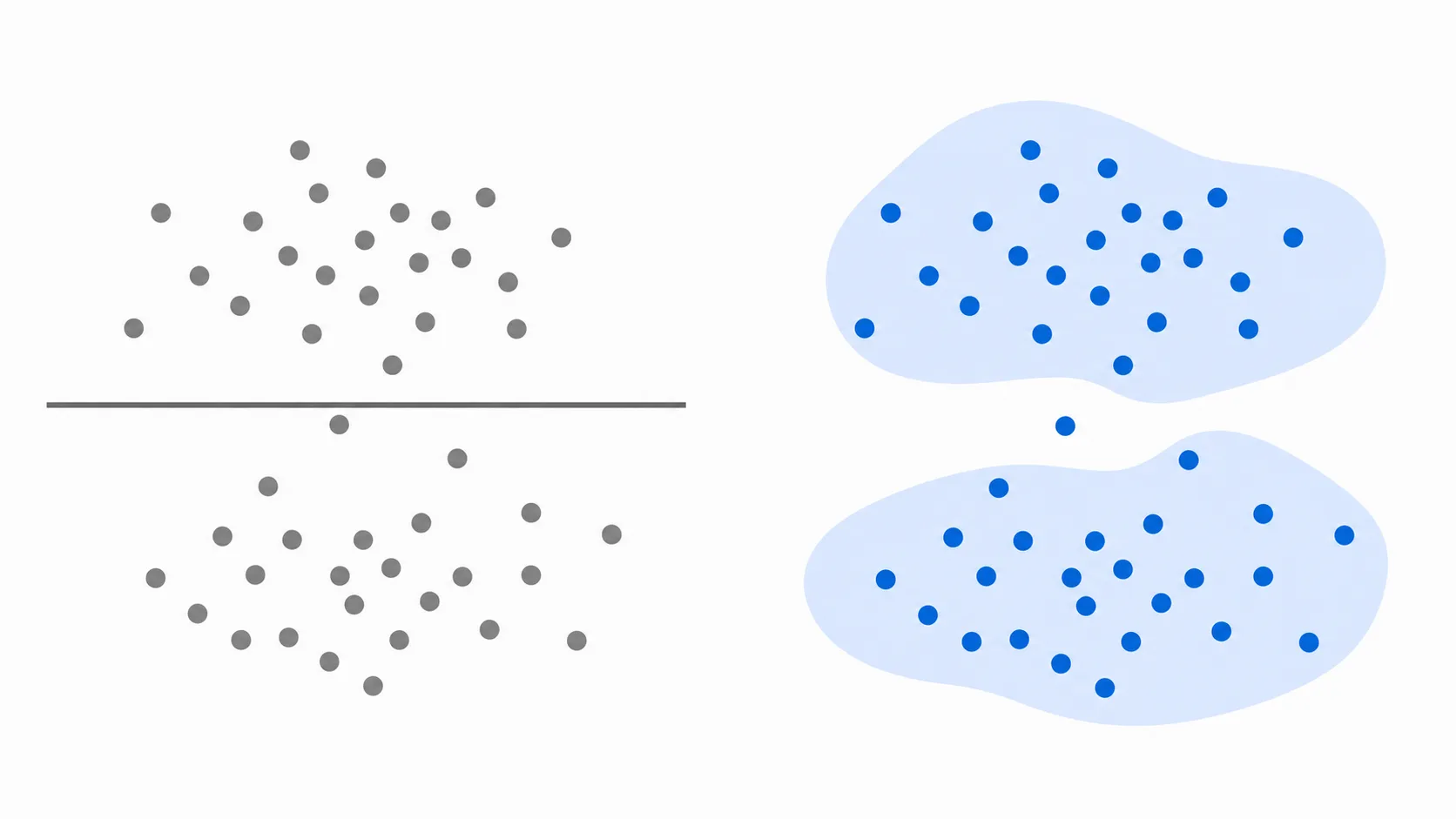
A vehicle can have more than one normal. A vehicle that runs at 9 in the morning and again at 7 in the evening has two legitimate duty windows, not one average starting time somewhere in the afternoon. Navionyx IQ identifies recurring windows as separate clusters and treats movement inside any of them as ordinary. Averaging them would describe a routine the vehicle has never once followed.
Speed is judged against the vehicle's own record. A loaded truck sustaining 70 and a small commercial vehicle sustaining 70 are not the same event. Navionyx IQ holds each vehicle's own speed distribution and treats a departure from it as the signal, which is what makes the result meaningful on a mixed fleet.
Not every vehicle has a pattern worth trusting. Some vehicles run a tight routine. Others are genuinely irregular, and no amount of analysis will manufacture a schedule they do not keep. Navionyx IQ scores every profile for pattern stability and reports that score openly.
Where stability is low, the system withholds schedule based conclusions rather than presenting a weak pattern as a firm one. Detection that does not depend on a routine, including night movement, territory departure and device silence, continues at full strength, because those require no schedule to be meaningful.
This is the part we consider most important. A system that is confident about everything is not trustworthy. One that tells you where its own evidence runs thin is.
The evening run falls outside the configured shift and is flagged every day, though it is routine for this vehicle.
Both runs sit inside windows the vehicle has established. Nothing is flagged.
Every Navionyx IQ result shows the baseline behind it
Navionyx IQ never reports a conclusion without the evidence that produced it. Every event records what was observed, the baseline it departed from, and the size of the departure. The product displays that baseline directly, alongside the finding, in plain language.
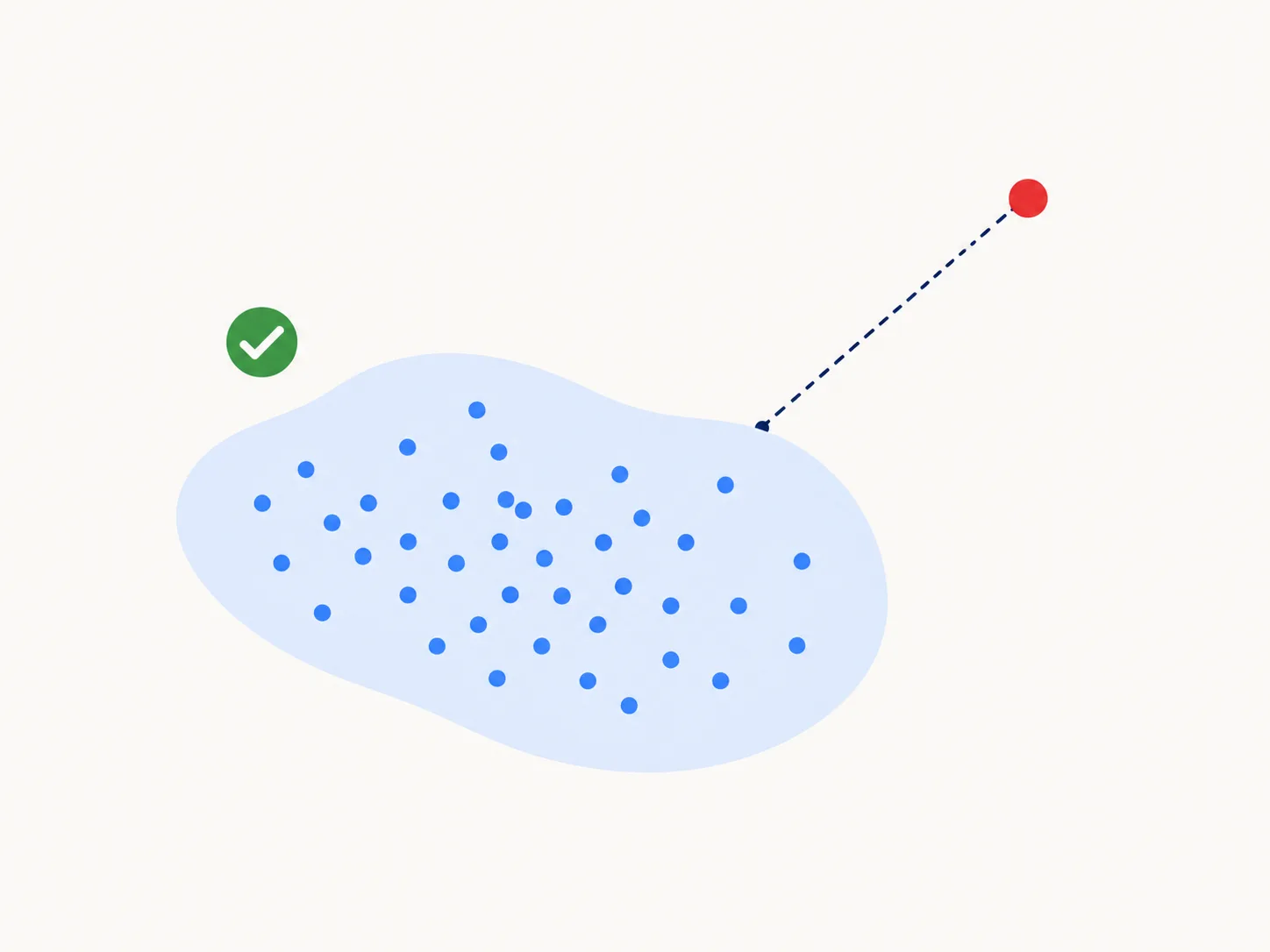
The italic line is the part that matters. Without it, the reader has an assertion. With it, they have an argument they can check, challenge, and act on.
This design has a practical consequence we think is worth stating plainly. Because each result is reproducible from stored inputs and a published method, a Navionyx IQ finding can be re examined months later and will reach the same answer. The baseline that applied at the moment an event was raised is stored alongside the event, so an old finding is always judged against the baseline that actually produced it rather than against a profile that has since moved on.
Legal analysis of India's Digital Personal Data Protection Act makes this more than a design preference. Commentary on DPDP compliance for logistics and telematics operators notes that scoring systems applied to individuals must be transparent and explainable, and must be accompanied by a grievance mechanism (King Stubb and Kasiva, DPDP compliance for logistics, GPS, telematics and risk). A score that cannot be explained is a compliance exposure, not only a product weakness.
The limits we state up front
A credibility page that lists only strengths is not credible. These are the boundaries of the system as it stands.
It does not predict crashes or driver intent. Navionyx IQ describes what a vehicle has done and how that compares to what it usually does. It does not forecast accidents, and we do not market it as if it could.
It does not infer what the data cannot support. Harsh braking and acceleration derived from position reporting are inferences from speed change, not accelerometer measurements. Navionyx IQ states this wherever such a figure is shown, adjusts its own confidence according to how often the device reports, and withdraws the measure entirely when the reporting interval is too coarse to support it honestly.
It does not identify drivers on its own. Without driver login, RFID or a comparable identification signal, behaviour belongs to the vehicle, not to a named person. Navionyx IQ labels it as vehicle behaviour in that case. Where a customer supplies driver assignment data, results are attributed accordingly.
It does not score a vehicle it has not seen enough of. Conclusions are weighted by how much evidence supports them. A vehicle with two weeks of sparse activity receives a cautious result that says so, not a confident one built on thin data.
It does not immobilise or act on a vehicle. Navionyx IQ produces analysis. Any operational action remains a decision made by the customer under their own agreements and processes.
Where your vehicle data goes, and where it does not
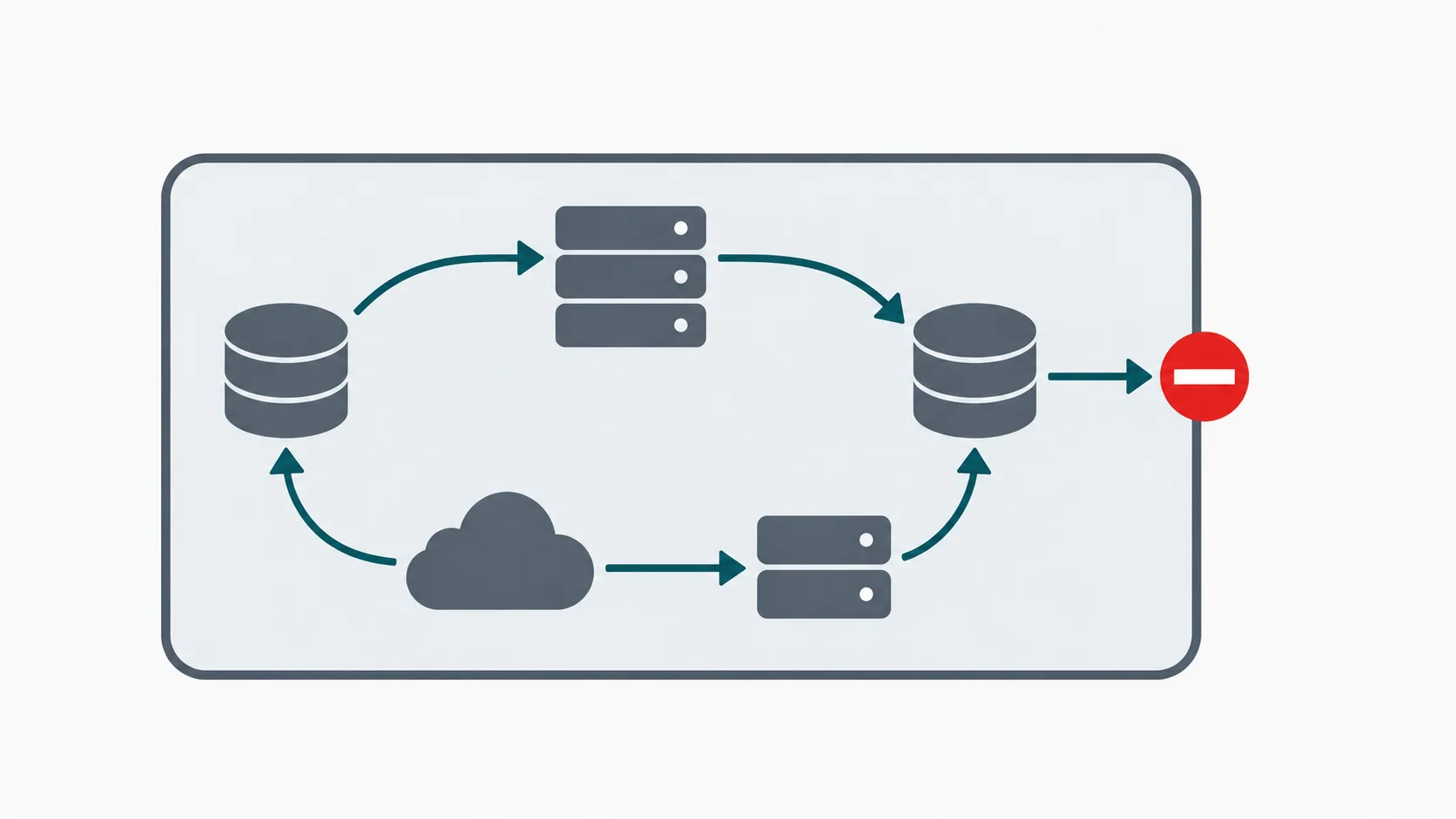
Processing stays within Navionyx infrastructure in India
Navionyx IQ runs on Navionyx controlled infrastructure hosted in India. Vehicle telemetry is not transferred outside the country for analysis. Under the Digital Personal Data Protection Act, cross border transfer of personal data is permitted only to jurisdictions notified by the Government, and contraventions carry penalties reaching INR 250 crore (King Stubb and Kasiva analysis of DPDP obligations for logistics and telematics). Keeping processing domestic removes that exposure rather than managing it.
No customer data is sent to third party AI services
Navionyx IQ performs no calls to external AI providers. Where the system produces a written summary of a vehicle's activity, that generation runs on Navionyx operated infrastructure within our own network boundary. No prompt and no telemetry reaches an outside model provider, and no customer data is available to any third party to train on.
Analysis reads from archives and writes only derived results
Navionyx IQ reads historical telemetry and writes back only derived output: daily summaries, behaviour profiles and events. It does not duplicate your raw tracking data into a second system, and it holds no write access to the operational platform.
Every number is reproducible and versioned
Each stored result records the method version that produced it and the time it was computed. When a method is revised, prior results remain attributable to the version that created them. There is no opaque model whose behaviour changes silently between runs.
Pseudonymisation where identity is not needed
The analysis operates on vehicle identifiers. It does not require borrower names, contact details, loan account numbers or any customer personal data to produce a behaviour profile, and it is designed so that identity remains in your systems rather than spreading into the analysis layer.
Where Powered by Navionyx IQ appears
The Powered by Navionyx IQ mark identifies analysis produced by this layer. It appears on:
- Behaviour and insight views within the Navionyx platform
- Portfolio and vehicle risk views provided to lending partners
- Exported reports and documents containing behavioural analysis
- White labelled products built on Navionyx where the analysis layer is licensed
For white label partners, the mark is how your own customers can verify that the intelligence inside your product has a defined method and an accountable source. Partners carry the mark under licence, and the analysis method remains the intellectual property of Navionyx Mobility Solutions Private Limited.
Navionyx IQ is available to platform customers and, for partners building their own products, as a licensed analysis layer accessed through an API.
Shown at actual display size, on light and dark surfaces.
Frequently asked questions
Does Navionyx IQ use artificial intelligence?+
The behavioural analysis is deterministic. Baselines, scores and events come from published statistical methods, not from a machine learning model, which is what makes every result reproducible and explainable. A language model is used only to turn results that have already been computed into readable summary text, and that generation runs on Navionyx operated infrastructure. No customer data is sent to any external AI provider.
How much history does Navionyx IQ need before it is useful?+
Device integrity detection, including silence during expected activity and power interruption, works from the first week because it needs no behavioural baseline. Territory and zone analysis becomes meaningful at around three weeks. Schedule based conclusions require a longer record, and the system reports its own pattern stability score so you can see when it considers a baseline firm enough to rely on.
Can a Navionyx IQ result be challenged or audited?+
Yes. Every event stores the observation, the baseline it departed from, the deviation measured, and the method version used. The baseline that applied at the moment the event was raised is preserved with the event, so a finding from months ago can be re examined against the evidence that actually produced it.
Is our vehicle data used to train any model or shared with other customers?+
No. Analysis is performed per vehicle against that vehicle's own history. Your data is not pooled with other customers' data, is not used to train any model, and is not sent to third party AI services.
Does Navionyx IQ work with our existing devices?+
It works with telemetry from AIS 140 compliant devices on the Navionyx platform. Reporting frequency affects which outputs are available: measures requiring fine resolution, such as inferred harsh braking, are withdrawn automatically on devices reporting too infrequently to support them, rather than being estimated unreliably.
Does running this analysis slow down our live tracking?+
No. Navionyx IQ runs as a separate service with its own infrastructure, reading from archived data on a background schedule. It does not share resources with live tracking, and results are precomputed, so viewing them costs nothing at the moment you open a screen.
See Navionyx IQ against your own fleet
The fastest way to judge the method is to run it on vehicles you already know. We will walk through a profile with you and show the reasoning behind every number on the screen.